

Hair loss treatment fails more often from forgetfulness than from biology. That’s the quiet truth behind most abandoned bottles sitting half-used in bathroom cabinets.
The active ingredient works, the research backs it up, but the daily habit of applying it twice a day for months on end is where most people lose the thread.
Minoxidil lotion (lozione di minoxidil) only works if it’s used consistently, and consistency is a behavioral problem dressed up as a medical one.
I’ve spoken with enough people who’ve tried and quit this treatment to notice a pattern. It’s rarely the itching or the greasy feeling that ends things early.
It’s the missed applications that pile up until the whole routine feels pointless.
The good news is that consistency isn’t a personality trait you either have or don’t. It’s something you can build with a few small, almost boring adjustments.
The Habit Problem, Not a Chemistry Problem
Most hair regrowth treatments ask for patience measured in months, not days. That’s a hard sell for anyone used to instant feedback loops. Skin creams show results in a week. This doesn’t.
The lag between action and visible reward is exactly why habit formation matters more here than in almost any other beauty routine.
Behavioral researchers have long pointed out that habits stick best when they’re attached to an existing routine rather than treated as a standalone task. A new habit floating on its own, with no anchor, tends to drift away within a few weeks.
This is why so many people who succeed with a twice-daily hair treatment describe it as something they barely think about anymore, not something they willpower their way through every morning and night.
Anchor It To Something You Already Do
The simplest fix is pairing the application with a task you already do without fail. Brushing your teeth is the most common anchor, and for good reason. It happens twice a day, morning and night, at roughly the same times the treatment needs to be applied.
Keeping the bottle next to the toothbrush means you see it exactly when you need to, without relying on memory alone.
Some people prefer showering as the anchor point instead, applying the lotion right after toweling off. Either works. What matters is consistency of placement, not which habit you choose. The goal is to remove the moment of decision entirely.
If you have to think about whether to apply it, you’ve already introduced a chance to skip it.
Track The Shed, Don’t Fear It
One detail trips up a surprising number of new users. Somewhere between the second and eighth week, shedding often increases before anything improves. Older hairs in the resting phase get pushed out to make room for new growth, and this can look alarming if you don’t expect it.
People who don’t know this is coming sometimes stop the treatment right when it’s starting to work, assuming it’s making things worse.
Knowing this phase exists ahead of time changes how it feels when it happens. It stops being a red flag and becomes a checkpoint. Write down your start date somewhere you’ll actually see it, not buried in your notes app, but on a sticky note on the mirror or a reminder that repeats monthly.
That way you’re measuring progress against a real timeline, not just your mood on some random Tuesday.
Protect The Two Applications A Day
There’s a temptation to double up if a dose gets missed, but more product doesn’t speed anything along. The standard amount, applied twice daily, is already the ceiling for what the scalp can absorb and use.
Skipping ahead or overloading a single application just wastes lotion and increases the odds of irritation.
Timing also matters more than people expect. Applying to dry hair and scalp helps the solution absorb properly, and waiting a few hours before washing or styling keeps it from rinsing away before it’s done its job.
A lot of people skip reading the instructions entirely and then wonder why results are patchy. In the early weeks especially, it’s worth a few minutes to actually go through them.
Small Tools That Remove Friction
A few accessories exist specifically to reduce the friction of application, and they’re worth mentioning because they solve real problems rather than manufactured ones.
A dropper or applicator designed for scalp use helps distribute product more evenly than fingers alone, which matters for people treating a wider area.
Some people also use scalp massage tools alongside their routine, and while the clinical benefit is debatable, they make the whole process feel less like a chore and more like something you’d actually want to do.
That alone is worth something when you’re trying to build a habit that has to last months.
None of these tools replace consistency. They just make the daily habit slightly more pleasant, and pleasant habits survive longer than tolerated ones.
The Long View
Results from this kind of treatment typically show up gradually, with thin new hairs appearing around the third or fourth month and visible density following a couple months after that. Six months is generally considered the honest checkpoint for judging whether it’s working, not four weeks and not even eight.
For people researching where minoxidil fits in the bigger picture of hair restoration, it also helps to know what you need to know about hair transplant procedures as a potential next step, since some people use topical treatments either before or after surgery depending on what their doctor recommends.
Understanding the full range of options puts you in a better position to make decisions that actually fit your situation.
That timeline sounds long until you compare it to how long most people have been dealing with thinning hair before they ever start treating it. What actually separates people who stick with it from people who quit early usually isn’t discipline.
It’s structure. A fixed spot for the bottle, a habit it’s tied to, and a rough idea of what to expect each month turns a fragile new routine into something closer to brushing your teeth. Once it stops requiring a decision, it stops being something you can forget.
 There is no universal age when someone suddenly needs anti-aging treatments. Skin changes gradually, and the rate of change depends on genetics, sun exposure, lifestyle, skincare habits, and other factors. That is why preventive aesthetics has become a common approach to skin care. Instead of waiting for deeper wrinkles, uneven pigmentation, or significant changes in skin texture, preventive treatments focus on maintaining healthy skin and addressing early signs of aging. Consulting a trusted Malaysia aesthetic clinic Bangsar residents can access may help you understand which treatments are appropriate for your skin. However, starting early does not mean using every available treatment in your twenties. A better approach is to understand what is happening to your skin and choose treatments that fit your age, concerns, and goals.

 Eyelid surgery is performed to improve the overall look of eyes by removing excess tissues like skin, fat, and muscle from the upper and lower eyelids. It helps to create a more youthful & attractive appearance. While this surgery can be a great way to improve the look of your eyes, it’s important to take some pre-care steps to ensure a successful outcome. Here are some essential things you need to do before undergoing eyelid surgery.
 There are plenty of good reasons why we need to be at a healthy weight and maintain it. Know these facts. An individual with a Body Mass Index (BMI) that ranges from 30 to 35 may die 2 to 4 years earlier compared to a person with
  Exipure is a dietary supplement for weight loss made from natural ingredients which has a unique system of action targeting the processes of burning fat as well as improving them. This weight loss formula makes use of natural extracts from eight herbs and plants blended in appropriate amounts. This blend of extracts increases the brown adipose tissue (BAT) levels in the body so as to make weight loss possible.
 The facial skin is the body’s region, and some other anomalies in signs or attributes of aging may be seen. But a selection of decorative cosmetic surgery processes is available now to supply a young and appealing facial look.
 People today undergo cosmetic surgery for a lot of factors. Some wish to appear younger. Other people attempt to alter a characteristic they have never enjoyed. The choice is private. Among these secrets is to establish realistic expectations. Cosmetic Surgery will not alter your own life. It will not solve personal issues or cause you to seem like somebody else. But it might provide you higher self-confidence and enhance your feeling of well-being. Successful outcomes often rely, in part, on how well you and your physician convey. Be certain that you feel comfortable with your physician and that you’re available for him or her about your objectives and questions.

 What’s Cosmetic Surgery?
 Cosmetic surgery is an area of science connected with adjusting a human body part’s shape and functioning. Most operational and deformities deficiencies could be completely or partly removed with the support of this science fiction. The Greek term “Plastikos” gets the root of the process which means match to mold.
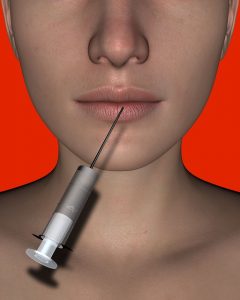 Botox is a cosmetic treatment or surgery to tighten loose skin. This is a treatment often used by Hollywood stars to prevent the signs of ageing from appearing.
 The average person if asked what plastic surgery is, they would answer Botox and Fillers. Plastic surgery covers head to toe procedures, from bones to blood vessels, from muscles to nerves. Plastic surgery has a dual value. One is that it solves a problem on open wound or a deficient part and the second aspect of it is the emotional reaction of the person who has that problem. Plastic surgery can usually help 90% of the person walking in clinics of plastic surgeons. It is a field of medicine that very few surgeons have ever regretted going into.
 Loss of blood is expected uncontrolled and large loss of blood can lead to a fall in blood pressure and may be dangerous With any surgery.








 Optimal liver function helps to metabolize fat and detoxify the body. The liver responds to the metabolism processes by releasing bile that works with an enzyme called Lipase.
 Consumers who read the latest Consumer Reports finally understood how Liv Pure works in improving the

 As you get older, it’s essential to make sure your body gets the right nutrition. Taking natural health supplements like Hildegard Maitrunk can help you achieve this and make sure your body receives all the essential vitamins, minerals and other nutrients


 When considering using human growth hormones as a means of increasing muscle mass, it’s important to know there is little research supporting its effectiveness. While it is true that human growth hormone (HGH) therapy is recommended for young patients diagnosed as afflicted with growth hormone deficiency, it doesn’t mean that the therapy will produce the same results in healthy adults.
 In the case of HGH, these are hormones that signal the liver to release a substance called insulin-like growth factor 1, a.k.a. IGF-1. This is the substance that directly helps patients with liver disorder, to help the body build muscle mass.
 Researchers explain that inasmuch as there is increased
 In the case of Magnesium, supplements chemists used the amino acid taurine as a chelating agent in producing a more stable and nutritive compound called Magnesium Taurate.

